

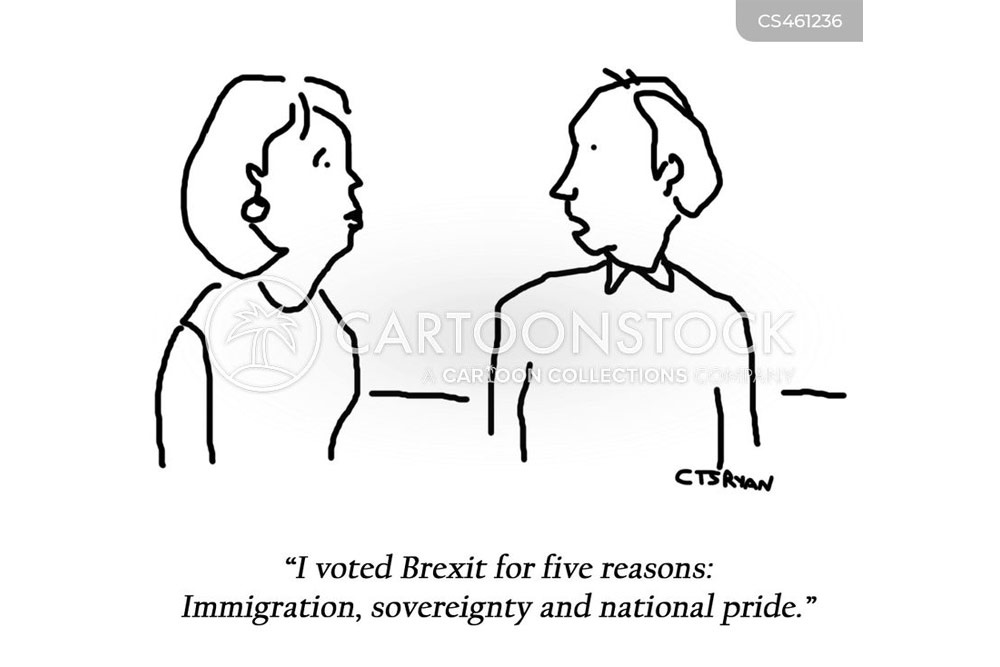
Years ago I often vox-popped the fine citizens of Birmingham, speaking to people similar to Christine and Steven in this Financial Times article about Reform supporters, published in the run-up to the local elections:
”According to analysis by the FT, drawing on the British Election Study, many of Reform’s strongest supporters are from working-class backgrounds. Some suffer from higher than average levels of financial insecurity… supporters of Reform are more likely to be retired than voters of any other party except the Tories”.
But the article presents their “diverse” explanations, without much interrogation.
When attempting to understand why less affluent voters in poorer areas of the UK opt for political parties that exist to further the interests of grifters and billionaires, here are the underlying reasons I return to first:
A sense of inequality / neoliberal deceit. They can see that their local area has deteriorated, compared to other areas, and that the deterioration is politically priced-in (somehow). Established politicians often won’t / cannot address the deterioration because of “market forces” - which is partly why they are regarded as dishonest - as the rich are largely exempt from the mythical market.
Us humans are not evolved to live in such complicated societies. Too much change, too much information.
Often the voters are older, and there’s an intersection between restricted income, reduced prospects, loneliness and nostalgia.
The voters often attended schools that did not encourage critical thinking or political analysis.
Status within these voters’ hierarchical zero-sum idea of society depends on there being people “beneath them”. Makes them more open to racist / veiled racist messaging.
Largely unregulated social media profits from, and incentivises conflict and polarisation. Many voters have few defences against highly sophisticated information warfare / behaviour modification controlled by foreign billionaires.
Friend / peer groups getting their fake news from social media, creating social pressure to believe entertaining lies.
Many c/Conservatives experience an empathy gap or parochial empathy: they only take an interest in an issue if it is personally relevant.
A lower level of education can be associated with “authoritarian personality” - a disposition to treat charismatic authority figures with unquestioning respect.
A number of very rich people want less regulation for their businesses, smaller gov and more cryptocurrency, so will fund extensive ongoing propaganda to persuade voters to choose parties such as Reform.
When some of the above elements are present, the conditions are created for populist politicians to receive support from the less wealthy. The politician will often activate this support by:
Telling simple stories to their target audience.
Providing tacit permission to express unreconstructed beliefs.
Confirming biases that were (often) already inserted by those funding the populist politician.
Thank you for reading this far. Please consider recommending Useful Ideas to a friend or a colleague. Here’s a link that makes it easy to do.
See also
Thanks for the analysis. I find it really frustrating that some people on lower incomes apparently can't see that voting for Reform is in direct opposition to their best interests. Instead they go along with the "bash Labour/Starmer" line that is being peddled by the right wing press & social media. Whereas Labour has in fact introduced a number of progressive policies over the last couple of years which will directly benefit the working class.
Wake up people!
Gross domestic product discredited as a measure of progress.
"Gabriel Zucman, an economist at University of California, Berkeley and the Paris School of Economics, said that while in the postwar decades GDP growth numbers were broadly indicative of how income was growing for most of the population, “today, there is a total disconnect between macroeconomic indicators and the reality of income gains for most people”."
https://www.theguardian.com/inequality/2026/may/15/wealth-britain-billionaires-gdp-rich-list-inequality